Baking
July 24, 2026
Overnight Cold-Rise Pizza Dough
Overnight cold-rise pizza dough with a 24-hour fridge rest for a chewy, blistered crust, gram weights included, plus freezing and oven tips.
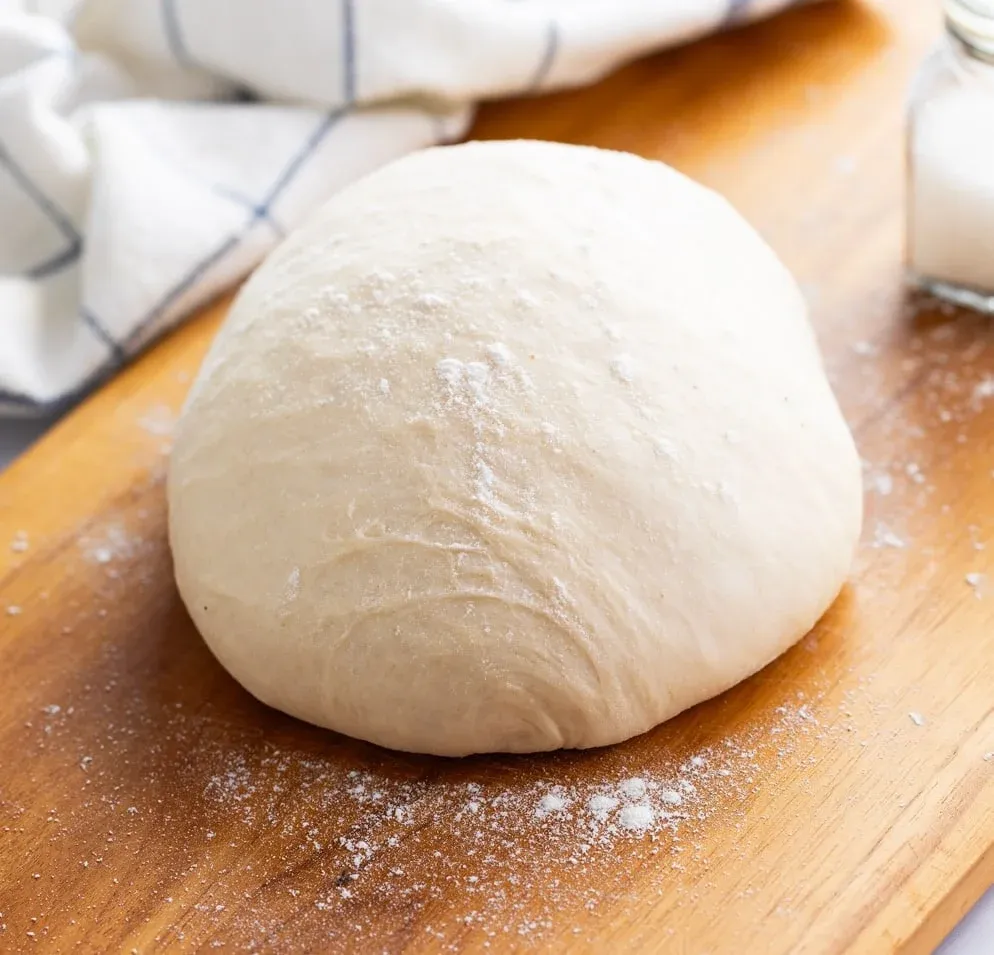
Mix it on Wednesday, bake it on Friday, and it'll taste like it came from a real pizzeria. Overnight cold-rise pizza dough takes about 15 minutes of hands-on work, then rests in the fridge for 1 to 3 days while the yeast works slowly and the flavor builds. What you get is a chewier, airier crust with a light tang, deep golden browning, and dough that stretches easily instead of snapping back.
Need pizza tonight? The same-day pizza dough or the honey wheat pizza dough will get you there.
What the Cold Does
In the fridge, yeast slows way down, but natural enzymes in the flour keep breaking starch into sugars. Those sugars add flavor and caramelize in the oven for a spotted, golden crust. Meanwhile, the gluten relaxes, so the dough stretches without a fight. And because the rise is so long, you only need ½ teaspoon of yeast.
Five Ingredients, Weighed
Bread flour. More protein means more gluten and a chewier crust. All-purpose works, just a little softer.
Water. This dough is 65% hydration, meaning the water weighs 65% of the flour. It's easy to handle and still bakes up airy in a home oven.
Salt. It's there for flavor and gluten strength, so don't skip it. Weigh it if you can, since different salts measure very differently by the spoon.
Yeast. Instant or active dry, stirred into the water. Too much yeast over a long rise makes dough sour and slack.
Olive oil. Helps the crust brown in a home oven, which doesn't get as hot as a pizzeria's.
A cup of flour can weigh anywhere from 120 to 150 grams depending on how it's scooped, and in dough that's the difference between stiff and sticky. An inexpensive kitchen scale makes this recipe turn out the same way every time.
From Bowl to Fridge
Stir the yeast into the water, add it with the oil to the flour and salt, and mix until there's no dry flour left. Cover it and walk away for 20 minutes. That rest lets the flour soak up water, so kneading takes only 4–5 minutes. The dough should end up smooth, springy, and slightly tacky, like the back of a sticky note.
Let it sit in an oiled, covered bowl for an hour at room temperature to get the yeast going, then divide it in two, shape tight balls, and seal each in an oiled container. Into the fridge it goes for 24 to 72 hours.
Baking Day
Take the dough out 2–3 hours before baking and let it relax, covered, on a floured counter. An hour before you bake, put a pizza stone or steel on the top-middle rack and crank the oven as high as it goes, usually 500–550°F. Press each ball out from the center with your fingertips, leaving a 1-inch rim untouched. Skip the rolling pin, since it pops the bubbles that make the edge puff. Top lightly and bake 7–10 minutes, until the crust is puffed and spotted brown.
Plan Your Week
| Mix the dough | Bake the pizza | Rise time |
|---|---|---|
| Thursday 7 pm | Friday 7 pm | 24 hours |
| Wednesday 7 pm | Friday 7 pm | 48 hours |
| Tuesday 7 pm | Friday 7 pm | 72 hours (most flavor) |
When the Dough Doesn't Cooperate
Too sticky. Use wet hands or a light dusting of flour. Next time, weigh the flour and cut the water by 10–15 grams.
Keeps shrinking back. The gluten is tight, usually because the dough is still cold. Cover it for 10–15 minutes and try again.
Tears when stretched. It needs a bit more rest. Give it 15 minutes under a towel.
Pale, dense crust. The stone wasn't hot enough or the dough was still cold. Preheat the full hour and let the dough warm up completely.
Soggy center. Too much sauce or wet cheese. Go lighter and pat fresh mozzarella dry.
Storing and Freezing
The balls keep up to 72 hours in sealed containers in the fridge, with no punching down needed. After that, the dough can turn slack and sour. To freeze, give it at least 24 hours in the fridge first, then wrap each ball in plastic, bag it, and freeze for up to 3 months. Thaw overnight in the fridge and give it 2–3 hours on the counter before shaping.
Use it for margherita or pepperoni, a white pizza with ricotta and garlic, calzones, or garlic knots to serve with crockpot lasagna soup. It also holds up beautifully on the grill. See homemade pizza on the grill for how to do it. For a crowd, slice it into squares for your game day food spread.
Cook's Tips
- Preheat the stone for a full hour. A stone or steel soaks up heat slowly. Twenty minutes isn't enough, and it's the biggest difference between okay and great homemade pizza.
- Use semolina on the peel. A light dusting of semolina or flour keeps the pizza sliding. Build the pizza quickly once it's on the peel, since dough sitting under wet sauce starts to stick.
- No stone? Preheat an upside-down heavy baking sheet the same way. The crust won't be quite as crisp, but it'll be close.
Pizza Dough Questions
Why does cold-rise dough taste better?
The long, cold rise gives enzymes time to turn starch into sugars and build flavor, so the crust tastes richer, slightly tangy, and browns more.
Do I have to let it come to room temperature?
Yes. Cold dough is stiff, springs back, and bakes up dense. Two to three hours on the counter makes it soft and relaxed.
Can I use all-purpose flour?
Yes. Hold back about 15 grams of water, since all-purpose flour absorbs a little less. The crust will be softer.
What temperature should I bake at?
As hot as your oven goes, usually 500–550°F, on a stone or steel that's been preheating for an hour.
Recipes in this note