Skip to content
Back to recipes
Italian Vegetarian Intermediate

Slow-Roasted Tomato & Ricotta Rigatoni

Two pounds of late-summer tomatoes collapse into a jammy sauce, finished with lemon ricotta and a fistful of basil.

4.8 (1,284 reviews) · 55 min total · Serves 4
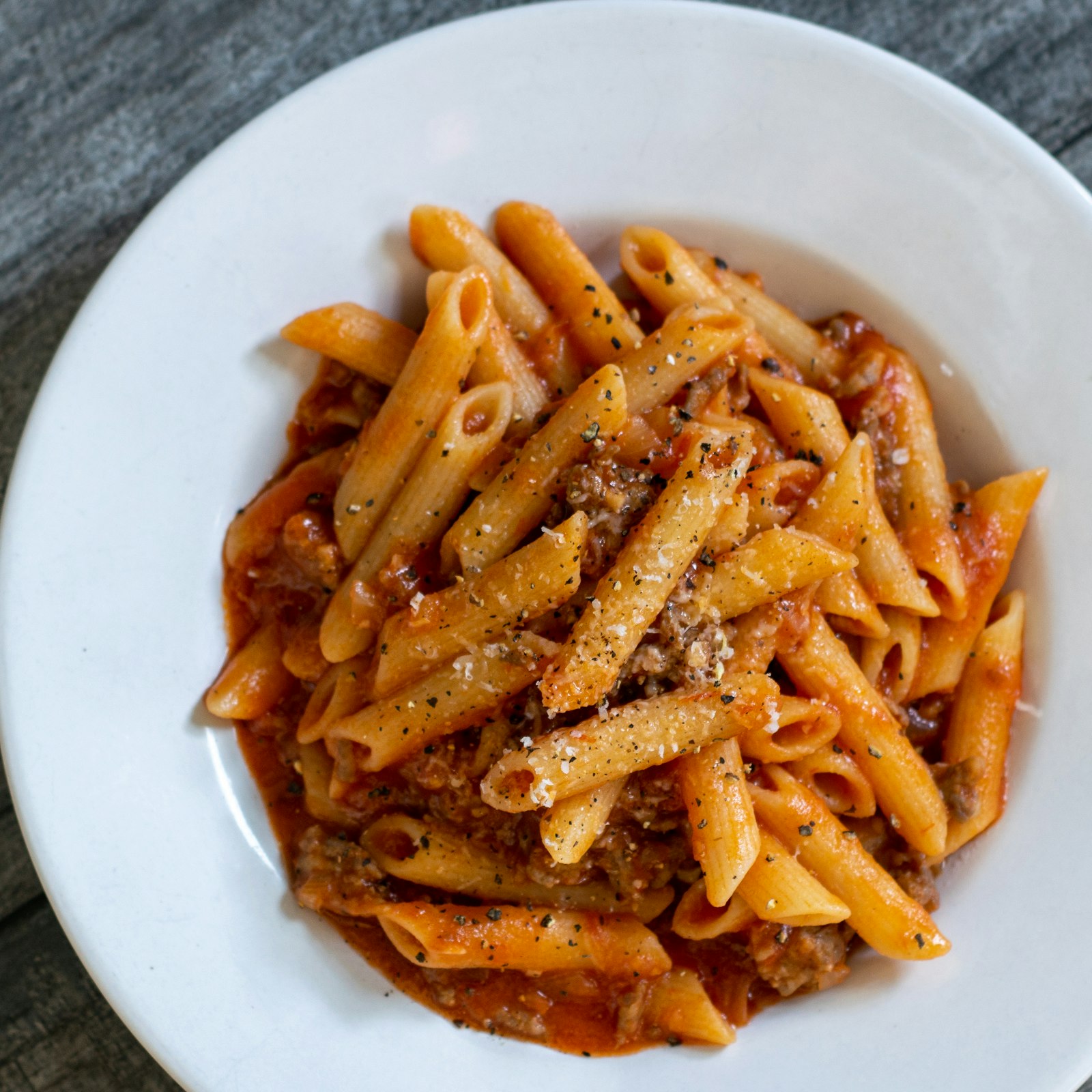
Bowl of rigatoni coated in roasted tomato sauce with spoonfuls of ricotta and torn basil

Recipe facts

Servings

4

4 servings

Scale quantities from 1 to 24 servings

Prep

15 min

Cook

40 min

Total

55 min

Difficulty
Intermediate
Cuisine
Italian
Dietary
Vegetarian
Category
Dinner

Overview

About this recipe

Slow-Roasted Tomato & Ricotta Rigatoni is a intermediate dinner recipe from our Italian files, built from 10 ingredients and 7 steps and timed at 55 minutes from board to table. Two pounds of late-summer tomatoes collapse into a jammy sauce, finished with lemon ricotta and a fistful of basil.

As written it yields 4 servings, and the ingredient list rescales with the servings control below so the shopping quantities always match what you are actually cooking. It is logged as vegetarian in our catalog, with 15 minutes of hands-on prep and 40 minutes of cooking — useful to know if you are slotting it into a busy evening.

Worth cooking

Why you'll love it

  • Weeknight-sized

    55 minutes total, with only 15 of them hands-on.

  • Intermediate to follow

    7 numbered steps and 10 ingredients, nothing hidden.

  • Vegetarian as written

    And the substitutions section covers the common swaps if you need to shift it further.

  • Scales cleanly

    Written for 4, adjustable from 1 to 24 servings with quantities recalculated for you.

  • Tested and re-tested

    Rated 4.8 across 1,284 cooks in our recipe box.

  • Italian flavours

    Filed under dinner — see the variations below for other directions.

From the recipe box

Slow-Roasted Tomato & Ricotta Rigatoni

Yield
4 servings
Prep
15 min
Cook
40 min
Total
55 min

Shopping list

Ingredients

0 of 10 gathered · scaled for 4 servings

Nutrition total for 4 servings

Calories
2728
Protein
104 g
Carbohydrates
352 g
Fat
104 g
Fibre
24 g

Catalog values are per serving estimates, multiplied here for the selected servings.

Step by step

Method

  1. Heat the oven to 400°F (200°C). Toss the tomatoes and garlic with the oil, chilli flakes and salt in a baking dish.

  2. Roast for 40 minutes, until the tomatoes have slumped and the edges are caramelized.

  3. Meanwhile, stir the ricotta with the lemon zest and a pinch of salt and leave at room temperature.

  4. Crush the roasted tomatoes with the back of a spoon to make a loose, jammy sauce.

  5. Boil the rigatoni until 1 minute short of al dente, reserving 1 cup of pasta water.

  6. Toss the pasta into the tomato dish with the pecorino and a splash of pasta water, stirring until glossy.

  7. Serve with spoonfuls of lemon ricotta and torn basil over each bowl.

Cook's note

Finish the pasta in the roasting dish, not a clean pot. Every caramelized patch on the sides dissolves into the sauce.
Swaps that work

Ingredient substitutions

5 swaps matched to this ingredient list, with quantities shown for 4 servings. The ratios stay the same at any scale.

  • Dairy 1:1 by weight

    Instead of 1 cup (250 g) whole-milk ricotta

    Well-drained cottage cheese, blended smooth

    Similar moisture and protein, slightly saltier. Drain it well or the batter and sauce loosen.

  • Dairy 1:1 grated; yeast at half the volume

    Instead of 1/2 cup (45 g) grated pecorino

    Aged vegetarian hard cheese, or nutritional yeast plus a pinch of salt

    Keeps the savoury depth. Nutritional yeast will not melt, so stir it in off the heat.

  • Pasta & grains 1:1 by weight

    Instead of 1 lb (450 g) rigatoni

    Gluten-free corn-and-rice pasta, or rice noodles for the stir-fried dish

    Gluten-free versions cook 2 to 3 minutes faster and hold less sauce — reserve extra cooking water to loosen.

  • Oils 1:1

    Instead of 1/4 cup (60 ml) olive oil

    Avocado or light rapeseed oil

    Higher smoke point for hard searing and roasting, but you lose the peppery finish — save a little olive oil to drizzle at the end.

  • Acids 1:1 for lime; vinegar at 2/3 the volume

    Instead of Zest of 1 lemon

    Lime, or 1 tsp white wine vinegar per tablespoon of juice

    Lime is brighter and slightly more floral. Vinegar has no zest oils, so add a strip of orange peel for aroma.

Options

Make it your own

  • Dial the heat

    Halve the chilli element for a version children will eat, or add a spoonful more at the end where the heat stays bright rather than muddy.

  • Make it more substantial

    Fold in a cooked grain or a tin of drained beans; add a little extra salt and acid, since the starch will absorb both.

  • Dairy-free version

    The dairy swaps below are all 1:1 or close to it. Expect a slightly leaner texture rather than a different dish.

  • Gluten-free version

    A measure-for-measure blend or gluten-free pasta works; watch the timing, which usually runs a few minutes shorter.

  • Change the herb

    Soft herbs swap by volume. Keep the woody ones in the cooking and the tender ones for finishing.

At the table

Serving suggestions

  • Rest before serving so the juices settle rather than run onto the plate.
  • Something starchy to catch the sauce: bread, mash, plain rice or buttered noodles.
  • A bitter or acidic side — chicory, dressed greens, quick pickles — to cut the richness.
  • Spoon every scrap of pan juice over the plates; that is where the seasoning lives.

Get it right

Success tips

  1. Read the method through once before you start and set out the ingredients — most mistakes happen mid-step.
  2. Weigh or measure to the list at your chosen serving size; the quantities above are already scaled for 4 as written.
  3. Heat the oven fully before anything goes in, and give food space on the pan — crowded trays steam instead of browning.
  4. Taste and adjust salt and acid at the end. A squeeze of lemon or a splash of vinegar fixes more dishes than extra salt does.
  5. Cook's note: Finish the pasta in the roasting dish, not a clean pot. Every caramelized patch on the sides dissolves into the sauce.
Keeping it

Storage & make-ahead

Fridge

Cool to room temperature within two hours, then refrigerate in an airtight container for 3 to 4 days. Keep any sauce or pan juices with the food — it reheats far better wet than dry.

Freezer

Freezes well for up to 3 months in flat, airtight portions with plenty of liquid. Thaw overnight in the fridge; anything crisp or fresh is better added again at serving.

Reheating

Warm gently, covered, over low heat or in a 325°F (165°C) oven until hot through, loosening with a spoonful of stock or water. Re-season and add fresh herbs or acid at the end.

Make ahead

With 15 minutes of prep, most of the chopping, mixing and measuring can be done a day early and refrigerated. Leave the final 40 minutes of cooking, and any finishing herbs, acid or dairy, for the day you serve.

Kit

Equipment checklist

  • Oven, fully preheated
  • Wide baking dish
  • Rolling pin or pasta roller
  • Microplane or fine grater
  • Digital scale, mixing bowls, sharp knife and board
  • Large mixing bowl and a smaller one for dressings or seasonings
  • Wooden spoon or silicone spatula for stirring and scraping
  • Measuring cups and spoons, plus a ladle for serving

Questions

Frequently asked

Can I change the number of servings?

Yes. The recipe is written for 4 servings and the control in the recipe card rescales every ingredient quantity and the nutrition estimate from 1 to 24 servings. Cooking times change far less than quantities do, so use the visual and temperature cues in the method rather than the clock.

How far ahead can I make it?

Most of the 15 minutes of prep can be done a day ahead and refrigerated. Leave the 40 minutes of cooking and any fresh finishing — herbs, acid, dairy, crisp toppings — for serving day. The storage section above has the specifics.

What if I am missing an ingredient?

Check the substitutions section: each swap lists a workable ratio and what it changes about flavour, texture or timing. Salt, acid and fat are the elements worth keeping honest; almost everything else has a sensible stand-in.

Is this recipe really vegetarian?

As written, yes — it is filed as vegetarian in our catalog. If you swap ingredients, check labels on stock, cheese and condiments, which are the usual places animal products hide.

My timing came out differently — what happened?

Pan size, how full the pan is, and how cold the ingredients were all shift timing by several minutes. Trust the described look and feel at each step, and give the food room so it browns instead of steaming.